

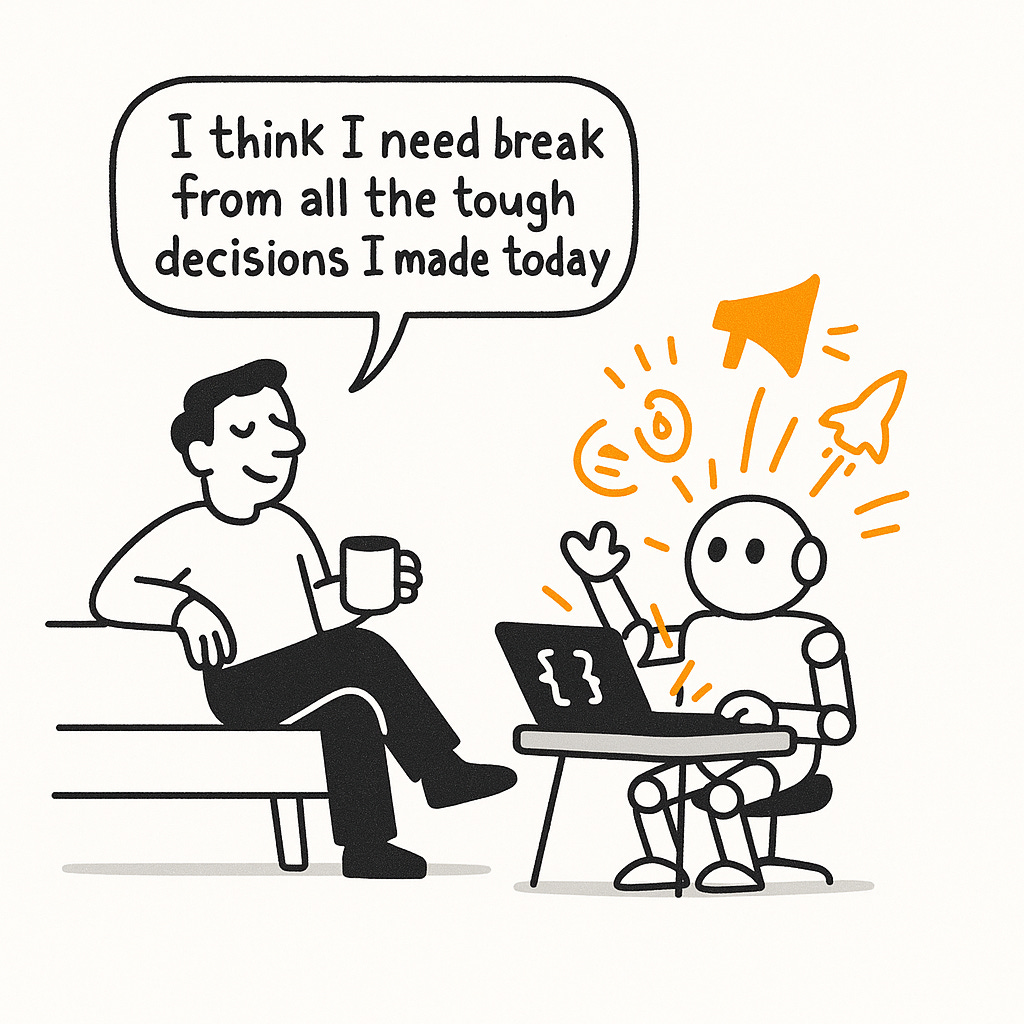
The past few weeks have been incredibly disruptive for my colleagues at Microsoft, coming on top of an incredibly challenging period where the tech sector has seen over 500,000 job losses since 2022.
At least 95,000 workers at U.S.-based tech companies were laid off in 2024, with 2023 seeing even higher numbers, and layoffs continuing into 2025 with over 75,000 people already impacted.
The question on everybody's mind: Are we seeing AI's first real impact on jobs?
As AI technology has improved dramatically over this same period, it's disrupting core aspects of all product development roles - across both Product Manager and Software Engineer alike.
Satya Nadella says 30% of code at Microsoft is now written by AI. Cursor AI hit $100M ARR in just 12 months - the fastest-growing SaaS company in history while No-code tools like Lovable, Bolt, and Replit are making app deployment accessible to anyone.
If anyone can now create prototypes, design, and deploy within hours with little tech experience, what does this mean for traditional PM and engineering roles?
As someone interested in the future of work and working on a tech product about user skills, I analyzed what the top industry experts are saying and made some predictions about how these roles will evolve.
My Take: 4 Roles That Will Thrive
A job will remain where there's a job to be done that AI cannot do better than humans. AI excels at implementation and technical skills, but decision-making will rest with people who can assimilate all inputs and exercise judgment.
What endures—and actually compounds—is human decision making, collaboration, connection, creativity, and trust. AI can draft a plan, summarize a call, even write a test; but it cannot earn stakeholder trust, resolve ambiguity, negotiate trade-offs, or make values legible in guardrails.
The cheaper the doing gets, the more those human muscles decide what should be done.
1. The Tastemaker:
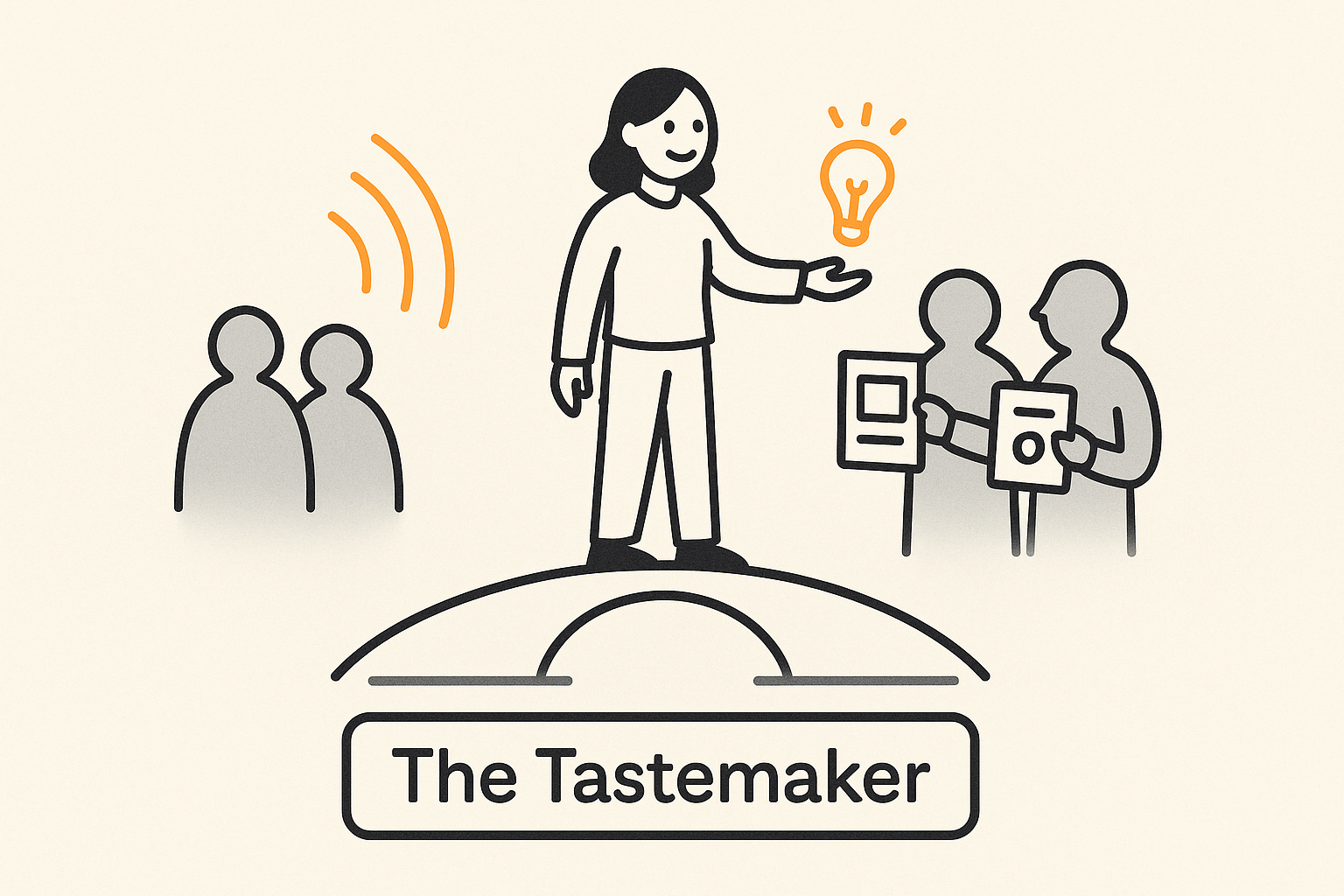
Aparna Chennapragada (Microsoft CPO) says the PM will evolve to be a "tastemaker". In a world of infinite ideas and quick apps springing up all the time, the person who can best judge what will resonate with potential customers, what the market seems to want but does not yet have, and how to position it for highest growth - will always be valuable. We are already seeing companies such as Airbnb and ElevenLabs collate the product management and marketing roles into one. This requires a fundamentally human skill of understanding customer needs and sales, which is not replaced by AI. For those in this track, I think human connection and empathy is your biggest strength.
I’d also loop Design & UX and the market-facing technical roles into this lane. When prototyping is near-instant, design doesn’t shrink; it compounds - the tastemaker will have to decide what UX communicates the “vibe” of the product most effectively with AI in the loop.
And on the go-to-market side, Solutions Architecture or Sales Engineering or DevRel become force multipliers. Sure, AI can demo and scaffold, but humans still do the problem framing, integration choices, and trust-building with customers.
The “tastemaker” is increasingly the connective tissue between what we could build and what the market will actually love.
2. The Product Engineer:
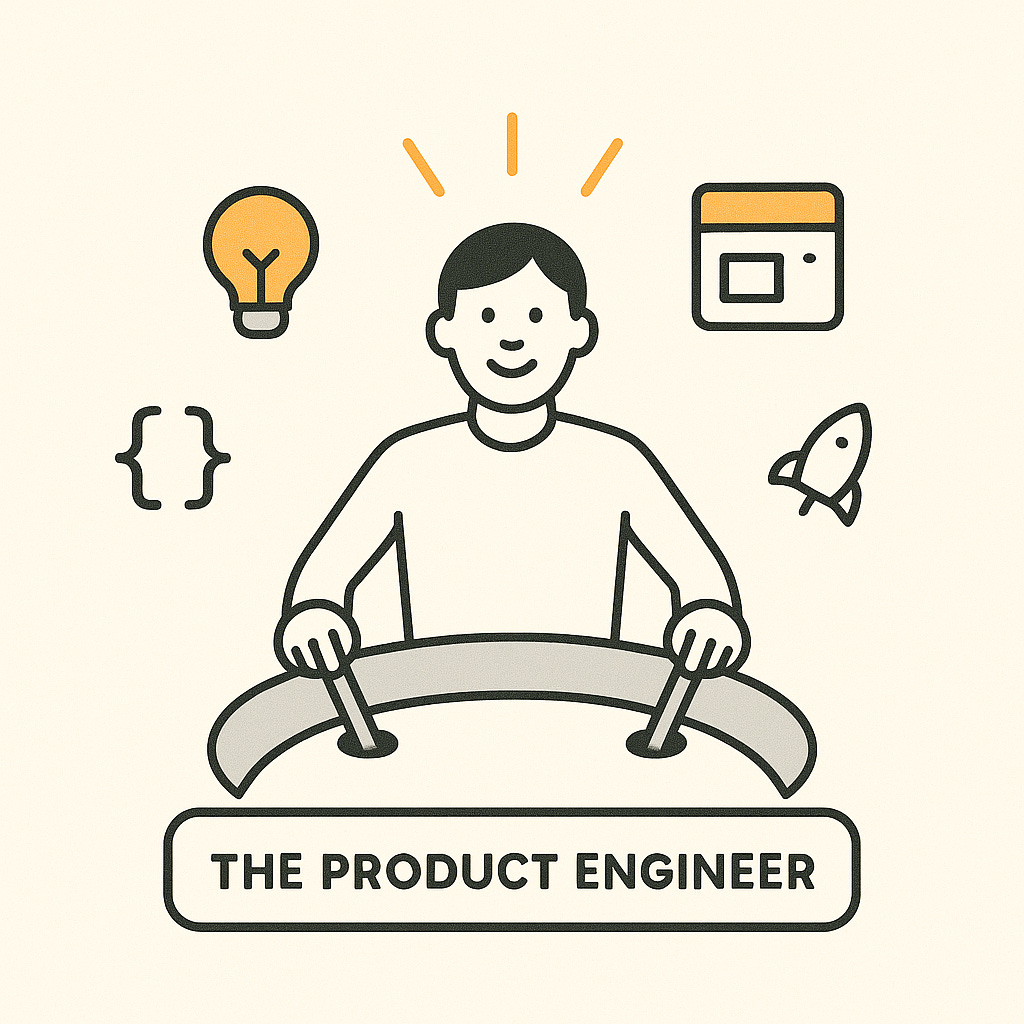
Why do we need teams of PMs, engineers, and designers in a world where apps can be created and deployed from a single prompt? The future probably has teams of 1-2 "product engineers" who use AI agents in all aspects of their workflow to quickly code and deploy products - owning all aspects of design, strategy of what to prioritize, and development.
Given the closeness to product development, I think this will probably be a natural transition for SWEs to take on more product knowledge and ownership rather than for a product manager; and probably is the next step for today's 10x engineers.
To make this real: the job shifts from typing to specifying, composing, and evaluating. That pulls QA / SDET / Test into the product engineer’s day-to-day—golden datasets, adversarial prompts, and regression every time a model updates, not just checklists. Add basic technical program management into this seat—agent-ops, versioning, staged rollouts, evaluations as gates, and cross-team choreography when a model update lands.
It also pulls in Data / ML / LLMOps / Evaluation: fewer train-from-scratch heroics, more retrieval/grounding, telemetry, and eval harnesses that keep the system honest. You’ll even see product specialists focused on ML/AI where interpreting model behavior and data quality becomes its own field.
And because AI will eat Tier-0/1 support, Support / Customer Success moves up-stack into escalations, empathy, exception handling—and curating the knowledge that trains your own agents. One person can wear several of these hats now; AI makes that realistic.
3. The Tech/Platform Lead:
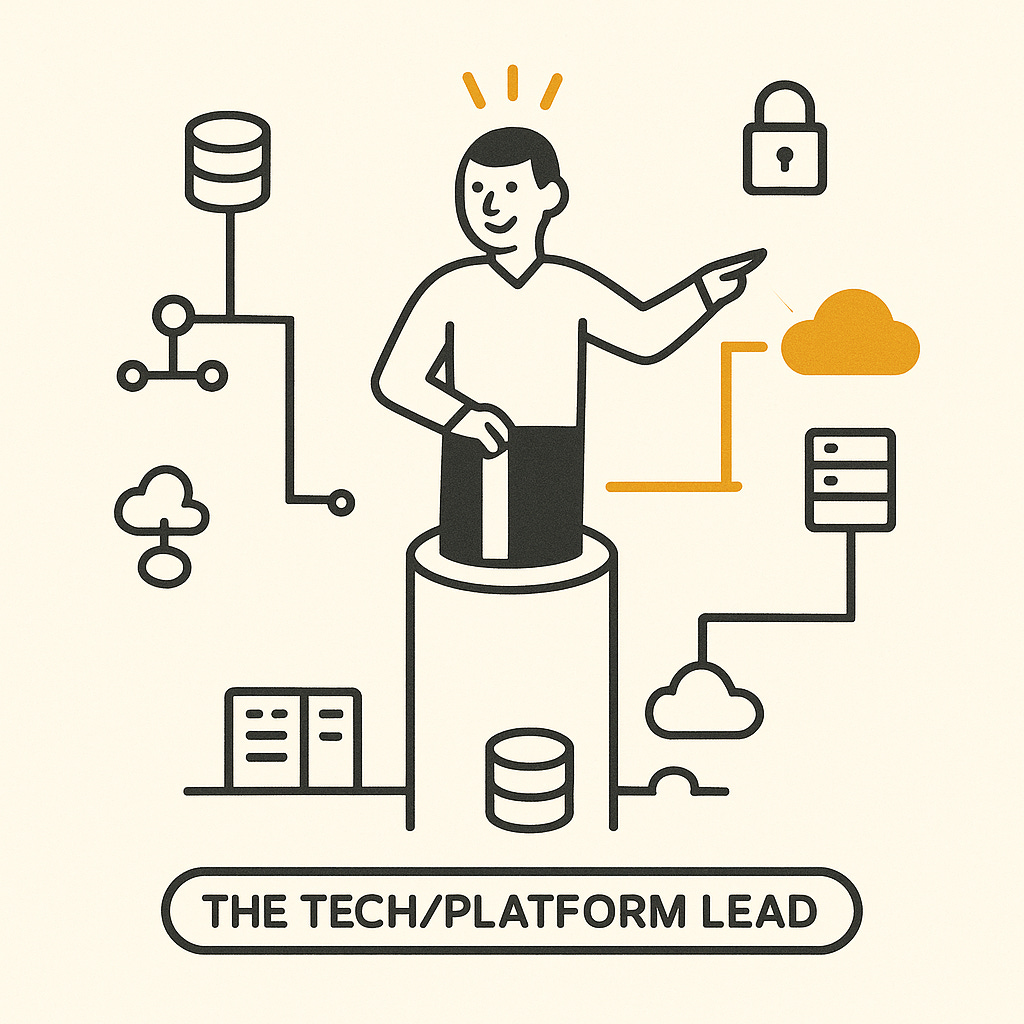
The engineer will evolve from just being a coder to someone exercising their knowledge of the entire tech stack - one who understands the implications, advantages and tech debt of each architecture decision - how that impacts performance, security, cost and reliability - and can make a call on which system to use in the product.
While AI can write code, it can't make complex system design decisions that balance competing technical constraints like choosing between databases, architecting systems that scale, or making security vs. performance trade-offs. This engineering expertise is and will remain valuable.
Reliability becomes a product feature and the “paved road” matters—latency p95/p99, rollout safety, and cost-to-serve are on this team’s scoreboard.
And because roles are collapsing, this person will also be accountable for the second aspect of the stack—the tech people: recruiting and managing engineers, keeping high-level visibility across the project/product/company, and giving everyone the tooling to move fast without setting pagers on fire at 3 a.m.
4. The Strategic Product Leader:
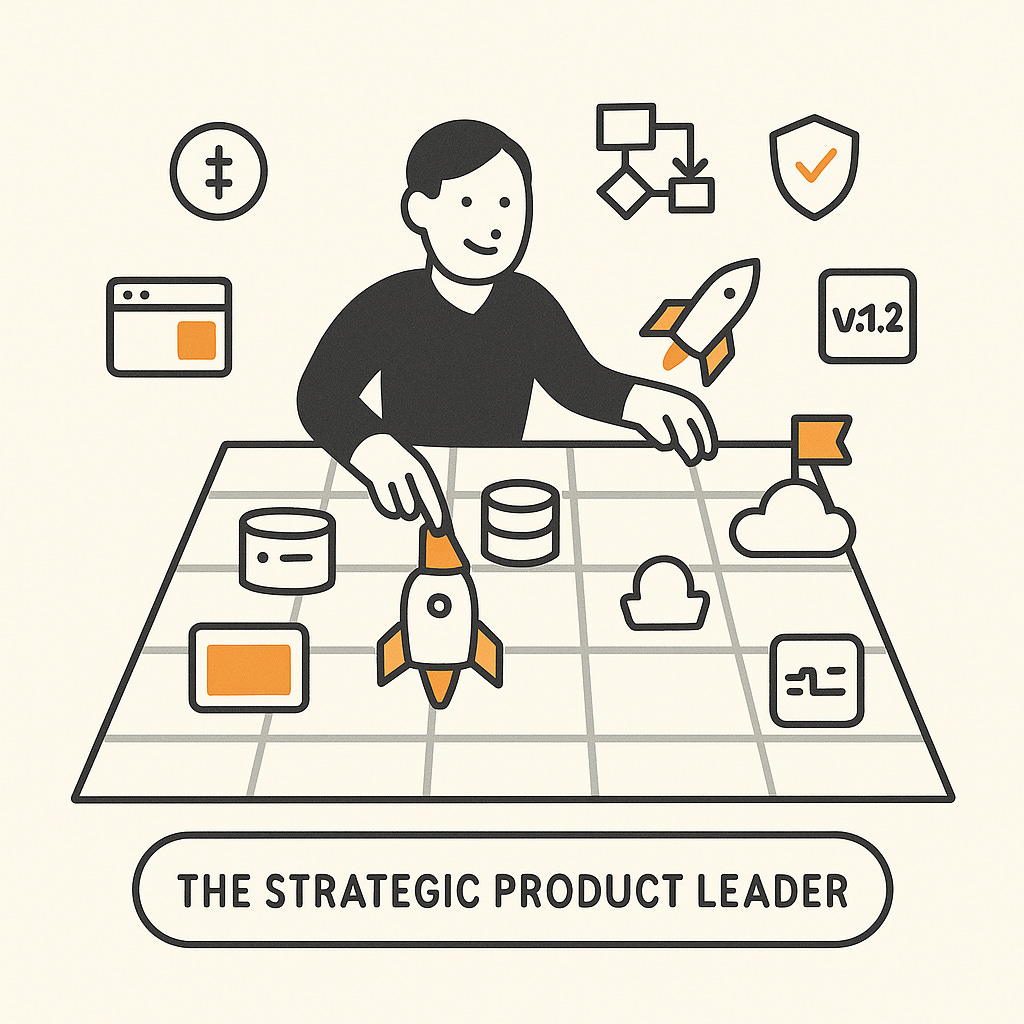
For bigger products and bigger organizations developing several products - the skill to manage hundreds of humans will always be valuable. AI will not replace raw decision making, especially where capital and jobs are impacted - therefore the strategic product leader will be the one to make decisions about which bets to make.
Note that the leader must lead via the strength of their expertise, and people's confidence in their decision making rather than title alone - so developing the decision making muscle by analyzing what product bets you have already made is key. This seems like the natural path for Senior PMs and engineers, and for great product leaders in the industry - I don't think this role is going anywhere.
Note that Financial operations and everything that it impacts in AI- tokens, context windows, caching, routing, and vendor economics are now first-order strategy levers, not back-office chores. Higher autonomy for agents will come, but humans still own consequence: capital allocation, guardrails, incident response, and when to pull the plug.
The takeaway
These roles are quite different from current PM and SWE expectations. I think the roles aren't disappearing - they are evolving.
And with AI lifting a lot of the doing, roles are collapsing into one—a single capable person can credibly wear multiple hats. That only works if people stay curious and learn beyond their current box; the good news is AI makes that easier than ever.
What stays stubbornly human
What endures—and actually compounds—is human decision making, collaboration, connection, creativity, and trust. AI can draft a plan, summarize a call, even write a test; it cannot earn stakeholder trust, resolve ambiguity, negotiate trade-offs, or make values legible in guardrails. The cheaper the doing gets, the more those human muscles decide what should be done.
My sources: What Industry Leaders Are Saying
Satya Nadella (Microsoft CEO): Paraphrase about agent workflows and “democratized” product ideation. For his words on agents “independently and proactively orchestrat[ing] tasks,” see the Build 2024 keynote transcript. msftstories.thesourcemediaassets.com
Aparna Chennapragada (Microsoft CPO): “If you aren’t prototyping with AI, you’re doing it wrong.” — Lenny’s Podcast episode + write-up. Lenny's Newsletter
Winston Tang (LeetCode Founder): Argument that coding is a subset of the engineering job and AI doesn’t erase the need for human problem-solving — Yahoo Finance interview. Yahoo Finance
Jensen Huang (NVIDIA CEO): “It is our job to create computing technologies that nobody has to program and that the programming language is human…” — NVIDIA company blog post from World Government Summit remarks. NVIDIA Blog
Sundar Pichai (Google CEO): Paraphrase about urgency + AI redefining workflows. See Google I/O 2025 keynote remarks (official Google blog transcript / video). blog.googleYouTube
Scott Wu (Cognition CEO): “Devin is a teammate… ready to build alongside you or independently complete tasks for you to review.” — Cognition Labs announcement. Cognition
Brad Lightcap (OpenAI COO): “No reason to believe AI will destroy jobs” in the near term — Bloomberg video interview. Bloomberg.com
Aravind Srinivas (Perplexity CEO): On the edge shifting from answers to asking the right questions — TED AI talk transcript. TED
This was informative and thought-provoking. The pace and scale of AI disruption are so rapid that keeping up has become a mental load in itself. My real challenge now is not just tracking the changes, but understanding what they mean and how to respond. Thanks! Please keep these coming.
PS: written by human :)